Resources Used in Practice:

1. How Does Learning Happen?
I selected "How Does Learning Happen?" It serves as a helpful tool because it gives a solid base for understanding how children learn through their connections with others, play, and exploration. I have used this resource in my work to help me plan activities that are based on what children like and that encourage them to participate actively. During activities like making wreaths, I aimed to create a space where children felt like they belonged and could freely explore different materials. This resource is important to me because it highlights how essential it is to have learning that is responsive and based on play, as well as to create good relationships with children. My teaching philosophy is based on the idea that children learn best when they feel supported, valued, and involved in important activities.
Reference (APA):
(Ontario Ministry of Education. (2014). How does learning happen? Ontario’s pedagogy for the early years. Queen’s Printer for Ontario.)
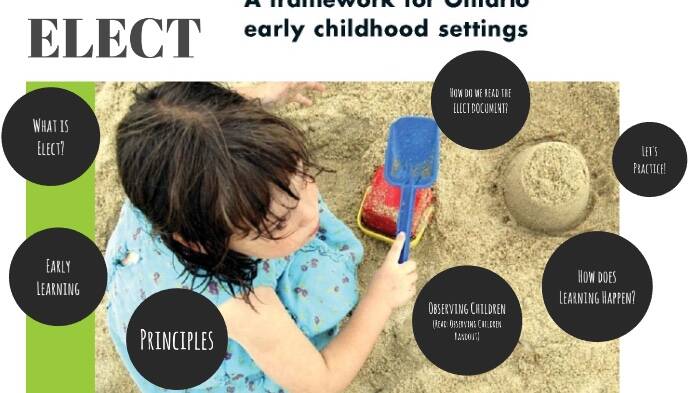
2. ELECT (Early Learning for Every Child Today)
I picked ELECT as a resource because it helps me learn about how children grow and what important stages they go through in their development. I have used this resource in my work to help me notice things and to plan activities that are suitable for different age groups. During the wreath-making activity, I noticed how the children's actions linked to important areas like fine motor skills, thinking skills, and social growth. This helped me gain a clearer understanding of how kids learn while playing and how I can help them grow. ELECT is important to me because it gives me a clear plan that helps me with my observations and planning. My teaching philosophy is based on the idea that every child grows and learns at their own speed. I think it’s important to support each child in ways that fit their unique needs.
Reference (APA):
Ontario Ministry of Children and Youth Services. (2007). Early learning for every child today: A framework for Ontario early childhood settings. Government of Ontario.

3. Think, Feel, Act: Lessons from Research about Young Children:
I selected "Think, Feel, Act: Lessons from Research about Young Children" as a helpful resource because it offers research-based methods that promote effective practices in early childhood education. I have used this resource to help me connect with children and to design activities that promote their emotional and thinking skills. During activities like playing with play dough, I asked open-ended questions to help kids share their thoughts and think more deeply about what they created. This resource is important to me because it shows how essential responsive teaching and meaningful interactions are. It relates to my teaching beliefs because I think teachers are crucial in helping kids with their thoughts, feelings, and overall growth.
Reference (APA):
Ontario Ministry of Education. (2013). Think, feel, act: Lessons from research about young children. Queen’s Printer for Ontario.
(All work in this portfolio is my own. All images and information respect confidentiality)
Create Your Own Website With Webador