1. Pedagogical Documentation:
I selected this teaching documentation because it shows how I can watch and think about what children learn during an important outdoor activity. While participating in a nature hunt, I saw kids looking around their surroundings, gathering natural items, and asking questions about what they discovered. The children showed curiosity, solved problems, and worked together as they looked at different objects, recognized colors and textures, and teamed up to finish the task. This experience helped with thinking skills by encouraging observation and categorization. It also promoted social skills through talking and working together with others. I used what I noticed to learn more about what kids like about nature and to create better outdoor learning activities for the future. This relates to my teaching philosophy because I think kids learn best when they can play and explore. I believe that hands-on activities help them be curious and connect meaningfully with the world around them.
2. Learning Story:
I selected “Love You Forever” by Robert Munsch because it provides a meaningful context to explore emotional literacy, empathy, and family relationships with children. During the story experience, children listened attentively, shared their feelings, and connected the narrative to their own family experiences. I facilitated discussions about love, care, and how emotions can be expressed in everyday interactions. This learning story reflects my philosophy of teaching and learning by emphasizing the social-emotional development of children through literature. Including it in my portfolio demonstrates my belief in using books not only as a literacy tool but also as a medium to encourage conversation, emotional awareness, and empathy, fostering children’s holistic growth and understanding of the world around them.
3. Responsive Inclusive Plans:
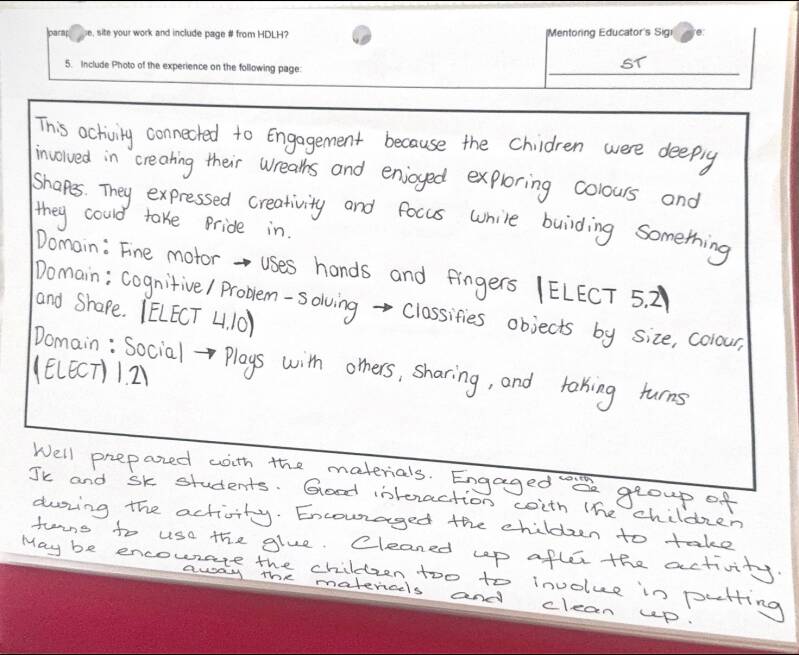
1. I chose this responsive inclusive plan because of the positive feedback I received, which highlighted my ability to be well prepared, engage children, and support their participation throughout the activity. The feedback noted that I had strong interactions with both JK and SK students and that I encouraged children to take turns while using materials, such as glue. It also recognized that I created an engaging group experience and supported children’s involvement from beginning to end, including clean-up. This showed me that I was able to create a structured yet flexible activity where children felt supported and included. I selected this plan because it reflects my growth as an educator and demonstrates my ability to create meaningful, interactive, and inclusive learning experiences that support children’s development.
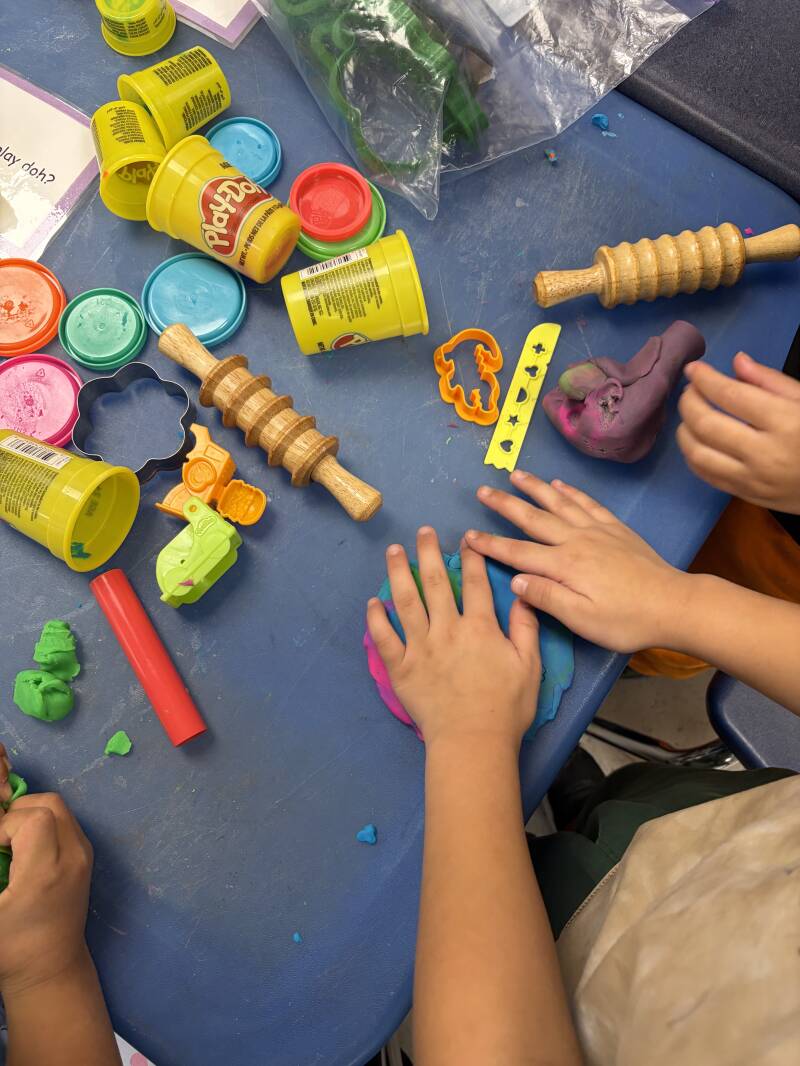
2. I chose this responsive inclusive plan because it demonstrates my ability to create an engaging and interactive learning experience that supports children’s creativity, communication, and development. In this activity, children used playdough to create different objects and were encouraged to answer questions about what they were making. This allowed children to express their ideas, develop language skills, and engage in meaningful conversations. The activity supported fine motor development through shaping and manipulating the playdough, as well as cognitive development through thinking, problem-solving, and describing their creations. I ensured the experience was inclusive by allowing children to participate at their own level and by providing support and prompts when needed. This connects to my teaching philosophy, as I believe children learn best through play-based, hands-on experiences that encourage creativity, communication, and active engagement.
4. Artifacts:
1. Classroom Environment Design:
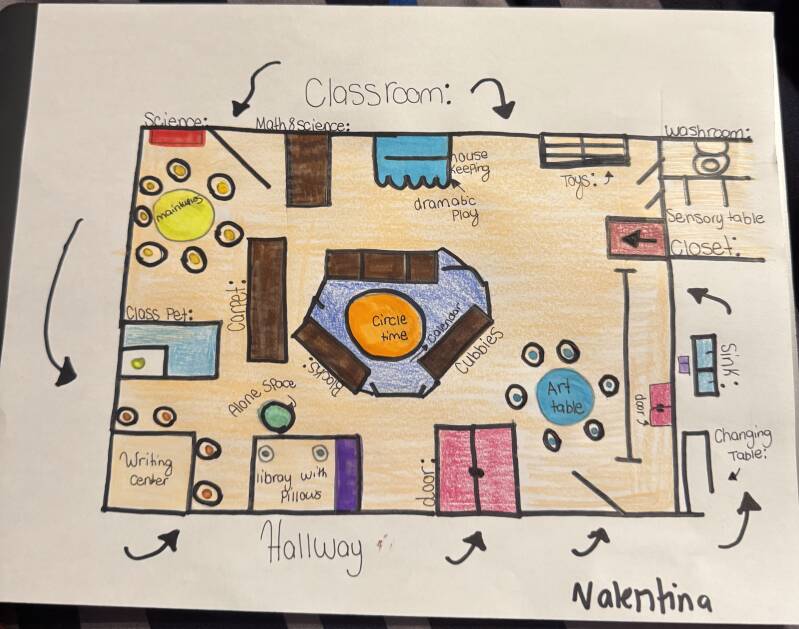
I chose this item because it shows how the learning environment helps kids grow and learn better. This assignment to set up the classroom helped me create a space that is fun, tidy, and meets the needs and interests of the kids. In this project, I looked at various subjects, resources, and how the surroundings can encourage learning through play, discovery, and self reliance. It also helped me realize how important it is to create a safe, friendly, and welcoming place where every child feels like they belong. This item is important to me because it shows how I can use ideas in real life and consider how the surroundings affect learning. It relates to my teaching beliefs because I think the environment is very important for helping children grow, be creative, and stay interested in learning.
2. I selected this artifact because it represents a meaningful learning experience that contributed to my growth as an early childhood educator. This activity demonstrates my ability to plan and implement an engaging experience that supports children’s development through hands-on learning. Through this experience, I was able to reflect on how children interacted with the materials, communicated with one another, and engaged in the activity. It also allowed me to recognize the importance of being flexible and responsive to children’s needs during the learning process. This artifact is meaningful to me because it shows how my confidence and skills have developed over time. It connects to my teaching philosophy, as I believe in creating play-based, engaging experiences that support children’s learning and encourage active participation.
3. Learning Experience: I chose this artifact because it shows how I can create a fun and interesting learning experience that helps kids grow physically and mentally. For this assignment, I designed an obstacle course named “The Danger Zone.” It featured different materials and organized steps that motivated kids to move, explore, and think critically. This activity helps kids develop their big muscles as they climb, crawl, and balance. It also builds their confidence and encourages them to be more independent. It also helps improve thinking skills like following instructions and putting steps in order. This artifact is important to me because it shows my creativity and my skill in planning fun activities that keep kids interested. My teaching philosophy is based on the idea that kids learn best when they are actively involved. I think they should have hands-on experiences that encourage them to move around, explore, and engage in ways that matter to them.
(All work in this portfolio is my own. All images and information respect confidentiality)




Create Your Own Website With Webador